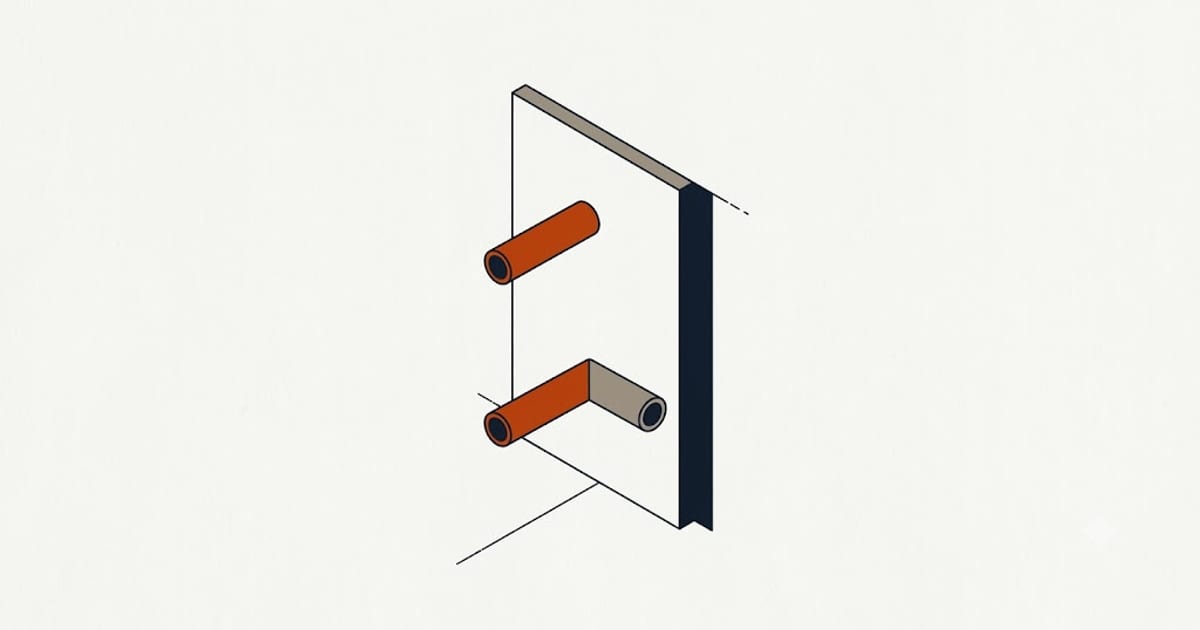
A condensing furnace pushes cool, wet exhaust out through a plastic pipe, usually through a sidewall. Where that pipe ends is governed by code and by the manufacturer's instructions, and the stricter of the two applies.
What the clearances protect against
Exhaust re-entering the house through a window, door or other opening.
Exhaust re-entering the furnace through its own combustion air intake.
Corrosion of a gas meter or regulator by acidic condensate in the exhaust plume.
Blockage by snow, which trips the pressure switch and shuts the furnace down.
Ice on walkways below the termination, since the plume is wet.
The dimensions that matter
Exact figures come from the code in force and from the installation manual, and both must be met. The categories to check are:
Height above grade or expected snow depth. This is the one most often got wrong. In snow country the requirement is above the highest anticipated accumulation, not above the ground.
Distance from operable windows and doors, and from any other air inlet into the building.
Distance from a gas meter or regulator vent.
Distance from an inside corner, since a corner traps the plume.
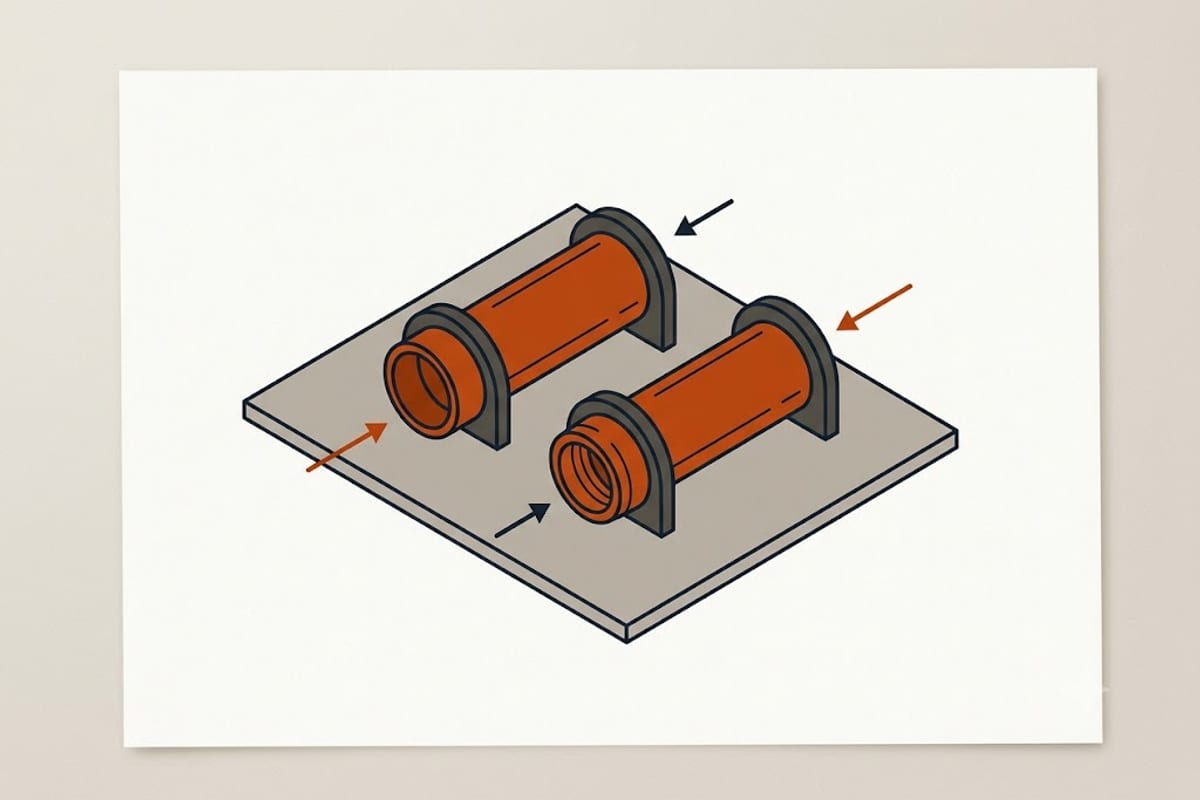
Separation and orientation between the exhaust and the intake on a direct-vent installation, which the manufacturer specifies precisely.
Clearance to the property line and to a neighbouring building.
The snow lockout
The most common winter failure on a sidewall-vented furnace is a termination buried or partly blocked by snow — either drifted, or dropped from a roof above.
The furnace detects the blocked vent and locks out, which is the safety system working correctly. The occupant experiences it as no heat during a snowstorm.
Prevention is termination height and location: away from the drift side, away from beneath a roof that sheds, and high enough that a heavy season does not reach it. A vent extension is a legitimate remedy where the original height is marginal.
Recirculation
If exhaust is drawn into the combustion air intake, the furnace burns oxygen-depleted air. Combustion deteriorates and carbon monoxide production rises.
Manufacturers specify the relative position of the two pipes — typically the intake below the exhaust, at a set separation — and concentric termination kits handle it in one penetration.
Ice forming on the intake is a visible sign of recirculation and it should be investigated rather than knocked off.
The plume
Condensing furnace exhaust is visible as white vapour in cold weather. It is water, not smoke, and it is normal.
It does mean the termination should not point at a walkway, a patio, a driveway that will ice, or a neighbour's window. This is not always a code violation and it is always a consideration.
Roof termination
Venting through the roof instead is an option, particularly where sidewall clearances cannot be met.
It costs more, it introduces a roof penetration to be flashed, and it moves the termination above the snow. On some houses it is the only arrangement that works.
What to check on an existing installation
Walk outside and look at the terminations after the first significant snow of the season.
Clear the snow away from them, look for ice on the intake, and note whether the plume is blowing toward a window or a path. Ten seconds of looking prevents most of the failures described here.
Pipe material and joint method
Manufacturers list the acceptable materials — commonly PVC, CPVC or polypropylene — and the acceptable cement and primer for the joints.
Substituting a material is not a detail. A furnace listed for polypropylene and vented in PVC is outside its listing, and in some jurisdictions the inspector will fail it.
Pipe diameter and maximum equivalent length are also specified, and every elbow counts against that length. A long run with many bends can exceed the limit and produce a furnace that trips its pressure switch intermittently.
Slope back to the furnace
The exhaust pipe carries condensate and must slope back toward the furnace so it drains into the trap rather than pooling in a low spot or running out of the termination.
A sag in a long horizontal run collects water, restricts the pipe and causes intermittent lockouts that are hard to diagnose from inside.