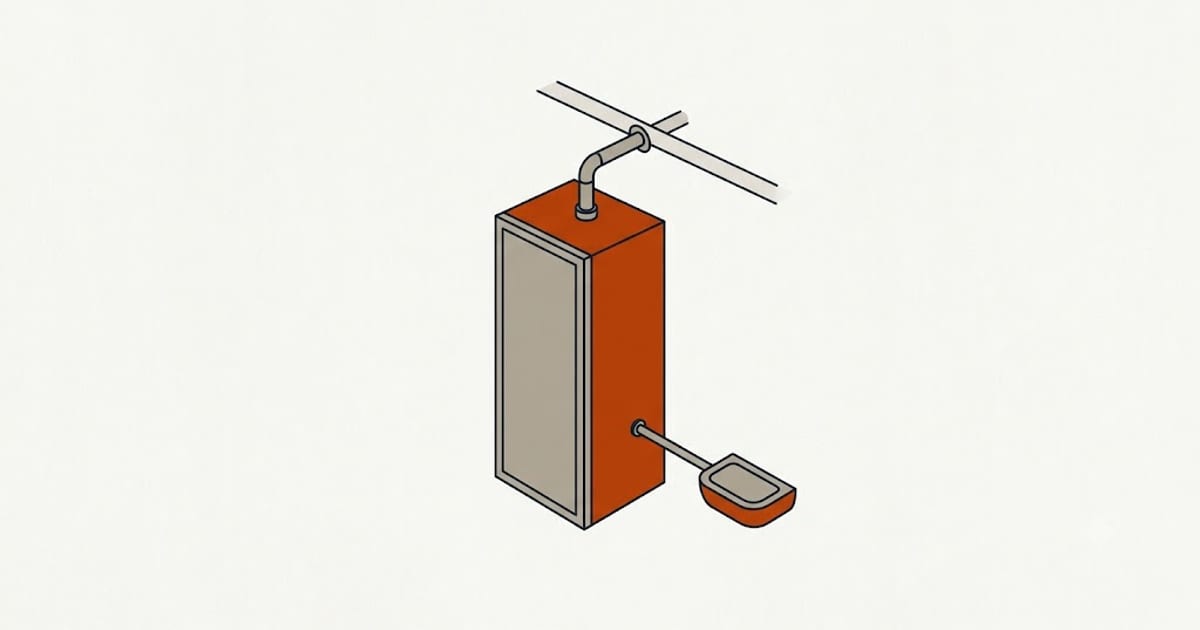
Look at what the furnace vents through. That single observation decides whether water is expected or alarming.
- White or grey plastic pipe (PVC or CPVC), usually 2 or 3 inch, going out through a sidewall — this is a condensing furnace, 90% AFUE or above. Water is the product. It is supposed to be there.
- Metal pipe, usually double-wall, going up into a chimney — this is an 80% AFUE furnace. Water here is a fault, and it needs attention.
Why a condensing furnace makes water
The efficiency comes from a second heat exchanger that pulls heat out of the exhaust until the water vapour in it condenses. Releasing that latent heat is exactly where the extra 16 percentage points of AFUE come from.
The by-product is liquid water — several gallons a day during cold weather on a typical house. It is mildly acidic, around pH 3 to 5, from dissolved combustion gases.
That water leaves through a condensate drain: a small plastic tube from the furnace to a floor drain, a condensate pump, or in some jurisdictions through a neutraliser cartridge first.
So when is it a problem on a condensing furnace?
When the water is coming out of somewhere it should not be:
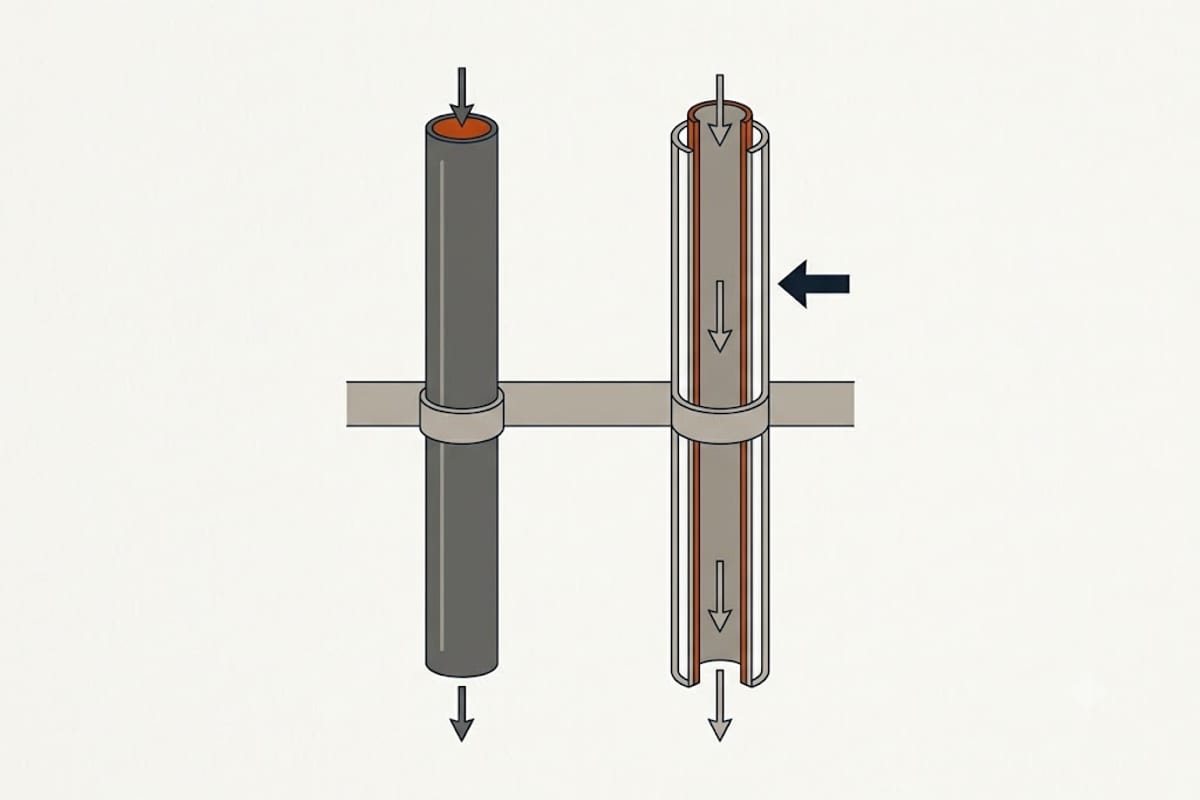
Dripping from the vent pipe joints. The exhaust pipe should be sloped back toward the furnace so condensate drains into the collector. A pipe sloped the wrong way, or sagging between supports, pools water at the low point until it finds a joint.
Pooling around the base of the furnace. The condensate drain is blocked. Algae and slime grow in these lines, and a blocked drain backs water up into the collector box until it overflows or the safety switch shuts the furnace down.
Ice at the outdoor termination. In very cold weather the last inches of the exhaust can freeze, closing the pipe. Most manufacturers have a specified termination configuration for cold climates; a vent that ices every winter was terminated wrongly.
Clearing a condensate line is straightforward: disconnect it at the furnace and flush it. A cup of vinegar down the line a couple of times a heating season prevents the growth that blocks it.
On an 80% furnace, water means the flue is not working
A non-condensing furnace is designed so exhaust stays above its dew point all the way out. If water is appearing, the exhaust is cooling too much before it leaves, and that has three usual causes:
An oversized chimney. This is the common one, and it is often created by an upgrade. If the furnace and the water heater shared a chimney, and the furnace was replaced with a condensing unit that now vents in PVC, the water heater is left alone in a flue sized for both appliances. It cannot warm that volume, the exhaust cools, and it condenses. The term for this is an orphaned water heater, and the fix is a properly sized chimney liner.
An unlined masonry chimney. Cold masonry pulls heat out of the exhaust. Condensate then soaks into the brick, and freeze–thaw destroys the chimney from the inside.
A blocked or partly blocked flue. Nests, debris, or a collapsed liner.
None of these are cosmetic. A flue that is condensing is a flue that is not drafting properly, and the same conditions that let water out let combustion gases out.
What to do
If it is a condensing furnace: check the slope of the vent pipe, then flush the condensate line. If water persists at the pipe joints, the venting needs re-supporting.
If it is an 80% furnace with a metal flue: stop and get it looked at. Ask specifically whether the chimney is correctly sized for the appliances still on it, and whether anything was removed from that chimney in the last few years.
In either case, if there is a carbon monoxide alarm in the house, test it now. If there is not, that is the cheapest thing on this page and it should be bought today.