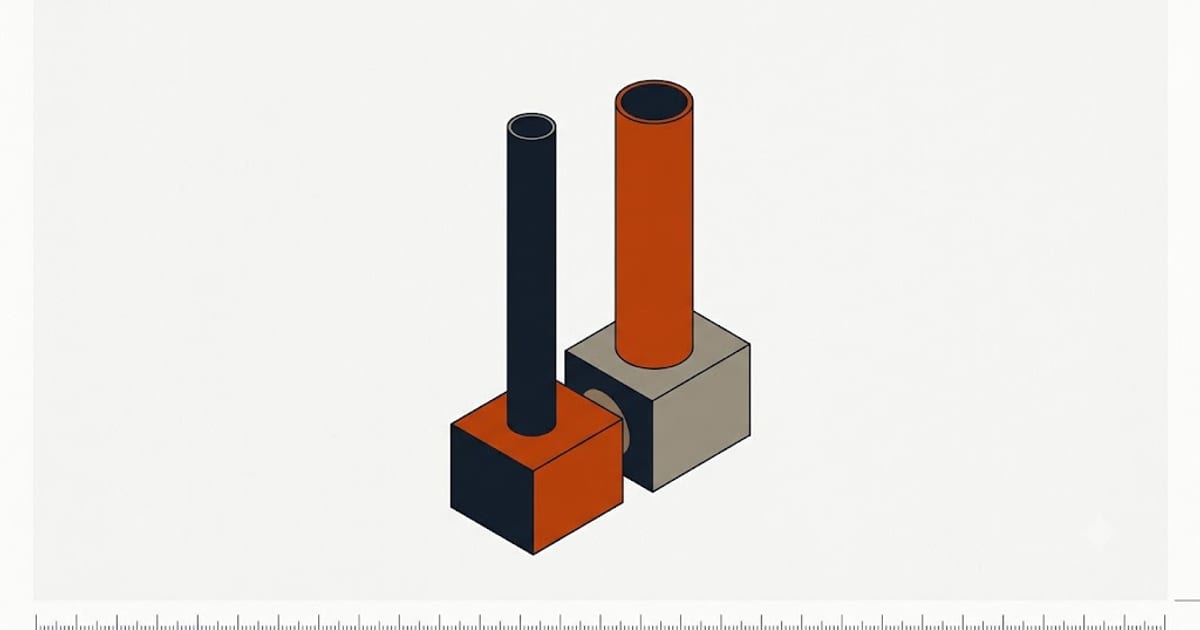
Appliance venting is classified by two properties of the exhaust: whether it is above or below its dew point, and whether it is under positive or negative pressure.
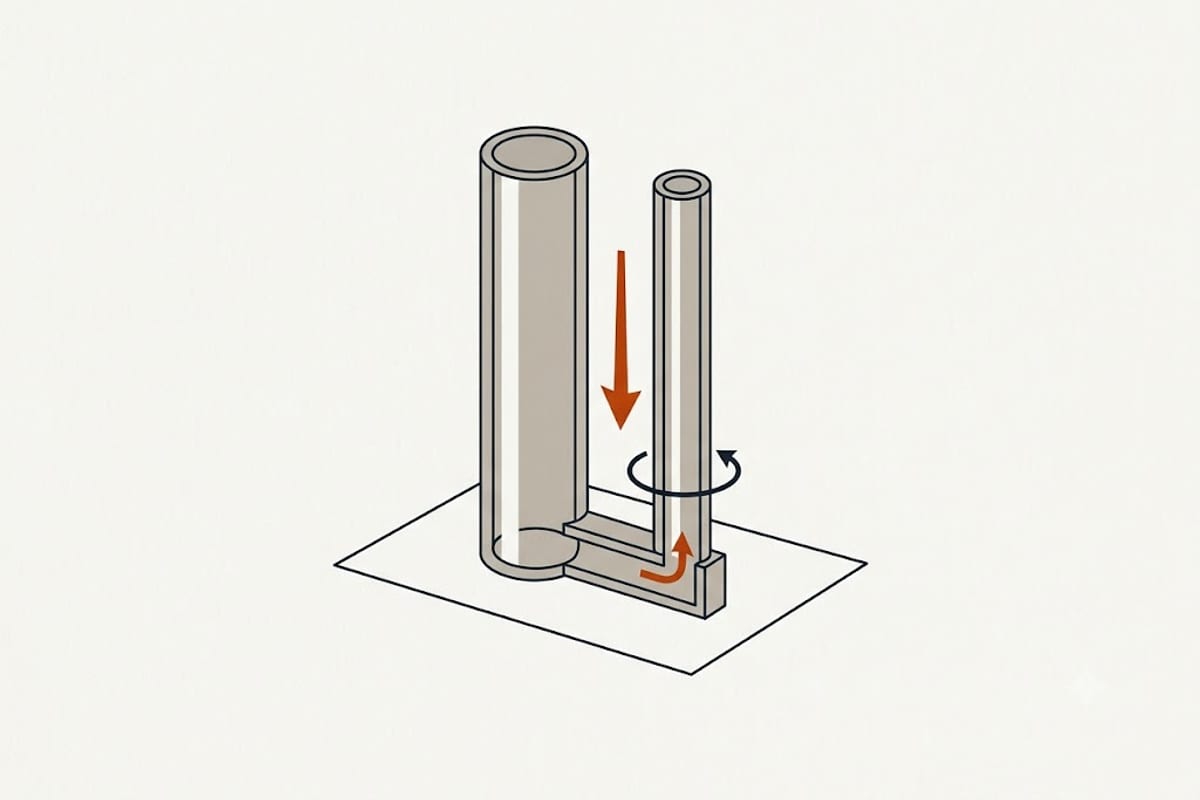
The four categories
Category I — negative pressure, non-condensing. The classic 80% AFUE furnace on a metal flue, drawing by natural buoyancy assisted by an inducer fan.
Category II — negative pressure, condensing. Rare in residential equipment.
Category III — positive pressure, non-condensing. Requires a sealed, listed metal vent.
Category IV — positive pressure, condensing. Modern 90%+ furnaces. Vented in PVC, CPVC or polypropylene because the exhaust is cool, and requiring a condensate drain because it is wet.
Almost all residential furnaces are Category I or Category IV.
Why the material changes
A Category I furnace sends exhaust up the flue at several hundred degrees, well above the dew point of the water vapour in it. Metal handles the temperature and the gas stays dry.
A Category IV furnace has extracted so much heat that the exhaust leaves at little more than 100°F and the water vapour condenses. Metal would corrode; plastic does not. But the exhaust is now too cool to rise on its own, so the inducer pushes it out under positive pressure through a sealed pipe, usually through a sidewall.
The orphaned water heater
This is the detail most often missed on an 80% to 96% conversion.
An older house frequently has a furnace and a gas water heater sharing one masonry chimney, sized for both. Remove the furnace from that chimney and the water heater is left venting a small amount of exhaust up an oversized, now-cold flue.
The result is poor draft and condensation inside the chimney, which damages the masonry and can cause backdrafting into the house.
The remedies are relining the chimney to a smaller diameter, converting the water heater to power-vented or direct-vent, or replacing it with a tankless unit vented separately. Any of them is a real cost, and a quote for a high-efficiency furnace that does not address it is incomplete.
Termination rules
Sidewall terminations have required clearances — from windows and doors, from the ground and expected snow depth, from gas meters, from air intakes, and from the property line.
Two problems recur:
Snow. A termination too close to grade gets buried, the pressure switch trips and the furnace locks out. In snow country the required height above expected snow line is not a formality.
Recirculation. Exhaust drawn back into the combustion air intake. Manufacturers specify the separation and orientation of the two pipes for this reason.
Combustion air
A direct-vent or sealed-combustion furnace draws its combustion air from outdoors through a second pipe. This is the better arrangement: it does not depend on the house for air, it is not affected by exhaust fans, and it does not compete with other appliances.
A furnace drawing combustion air from the space needs that space to have adequate air, which in a tight modern house or a small mechanical closet frequently means a dedicated make-up air provision.
Condensate
A condensing furnace produces a few gallons of acidic condensate a day in cold weather.
It needs a drain, a trap, and often a neutraliser cartridge before discharge, depending on local requirements and on whether the drain is a metal or cast iron line.
Two failure modes are common: a frozen condensate line where it runs through an unheated space, and a blocked trap, both of which lock the furnace out. Both are avoidable at installation.
What to check on any quote
The furnace category, the vent material and route, the termination location and its clearances, the combustion air arrangement, the condensate route, and — if there is a shared chimney — what happens to the other appliance on it.
That last one is the item that turns up as a change order after the work has started.