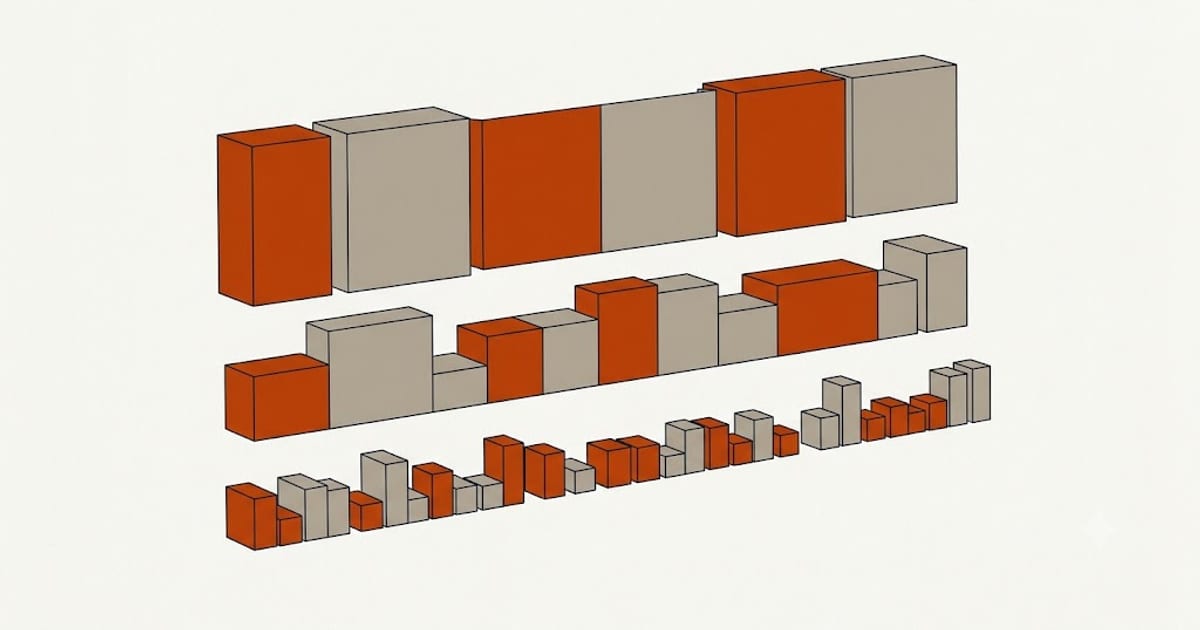
Furnaces differ in how finely they can match their output to what the house needs at that moment.
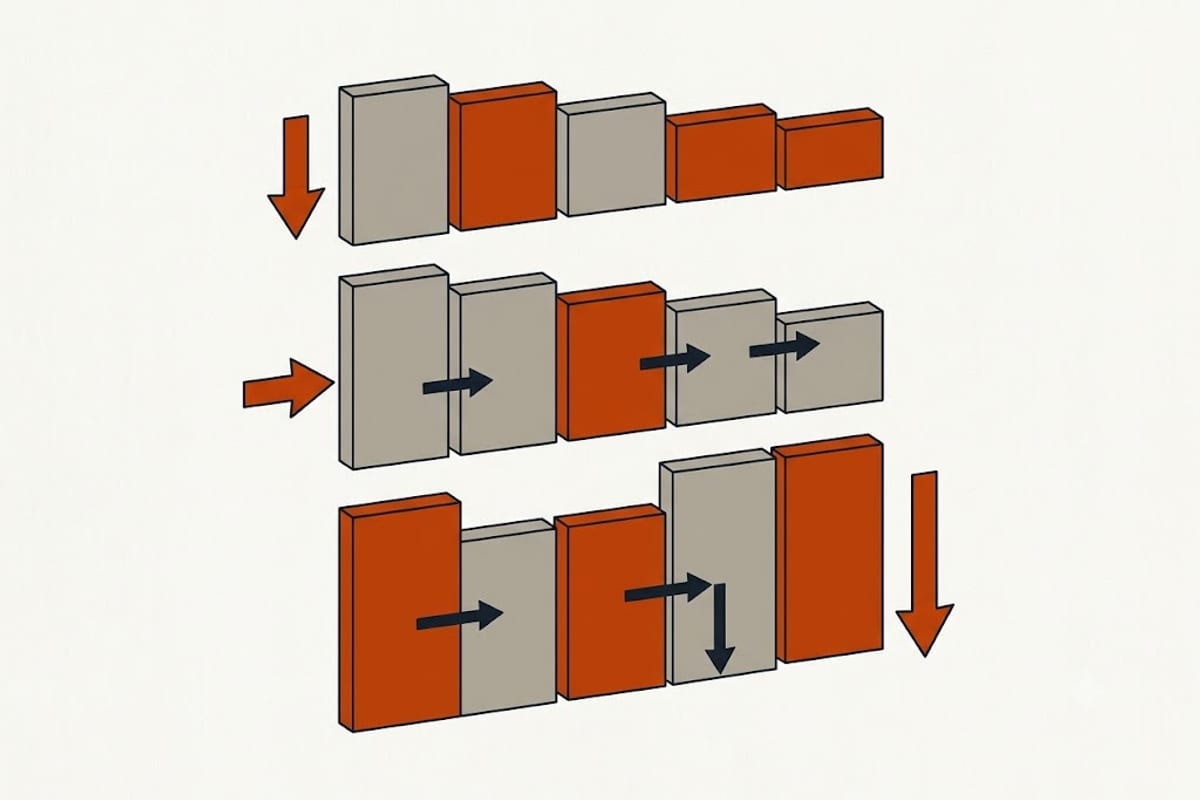
Single-stage
Full output or nothing. Since a house is at design load for only a handful of hours a year, a single-stage furnace spends its life cycling to average out to a smaller demand.
Cheapest, simplest, and the source of the most common complaints about temperature swings and drafts.
Two-stage
A low fire around 60–70% of full input and a high fire at 100%.
The furnace starts in low, stays there for most of the season, and steps up only in severe weather or after a deep setback.
Longer, gentler burns mean smaller temperature swings, quieter operation, and better distribution to the far rooms because the blower runs longer.
Modulating
The firing rate varies continuously, commonly from 40% to 100%, paired with a variable-speed blower that tracks it.
The furnace finds the output that matches the load and holds it, running nearly continuously at low fire on a typical day rather than cycling at all.
What longer burns actually deliver
Even temperature. A modulating furnace can hold a house within about a degree; a single-stage one typically swings three or four.
No cold-air feel. Supply air is warmer and steadier at low fire, whereas a single-stage furnace delivers a blast of hot air and then stops, which reads as drafty.
Better distribution. Rooms furthest from the furnace get heat only when the blower runs. Longer runs reach them.
Quieter. Low fire and low blower speed are noticeably quieter.
Better filtration, because air passes the filter more of the time.
What they do not deliver
Large fuel savings. The AFUE difference between a single-stage and a modulating furnace in the same efficiency family is small. Most of the benefit is comfort, and it is worth being honest about that when comparing a quote.
The exception is blower electricity: a variable-speed ECM motor uses substantially less power over a season than an older PSC motor, and that saving is real and is not counted in AFUE at all.
Where it matters most
Houses that are already oversized, which is most of them. Staging is the practical way to make an oversized furnace behave.
Large or spread-out houses where the far rooms never keep up.
Houses with a zoned system, where the equipment has to operate against a partly closed duct system.
Anywhere the current complaint is temperature swings rather than insufficient heat.
Where the case is weaker
Small, tight, well-distributed houses where a correctly sized single-stage furnace already runs long cycles.
Mild climates with short heating seasons.
Where service availability matters — modulating furnaces have more electronics, and a control board is an expensive part.
The thermostat
Two-stage and modulating furnaces need a thermostat that can call for the stages, and many modulating units require the manufacturer's own communicating control rather than a generic smart thermostat.
Worth confirming before buying a thermostat separately, and worth raising if a particular thermostat matters to the household.
What it does not replace
Staging makes an oversized furnace behave better. It does not make the load calculation unnecessary, because the modulation range is a percentage of full input — a furnace at 200% of load still has a minimum fire above what a mild day needs.
Size it properly first, then choose the staging with the remaining budget.
The air conditioner shares the blower
On a house with central air, the furnace blower is also the air handler for the cooling system.
A variable-speed ECM blower therefore improves summer performance too: it can run at the lower airflow that favours dehumidification, and it can circulate continuously at low speed between cycles.
That is worth counting when weighing the cost of a variable-speed furnace, because half the benefit lands in a season the furnace is not running.
Retrofitting staging is not practical
Staging is a property of the gas valve, the control board and the blower together. It is not something added to an existing single-stage furnace.
The decision belongs at replacement, which is another reason to plan a replacement rather than have one forced by a January failure.