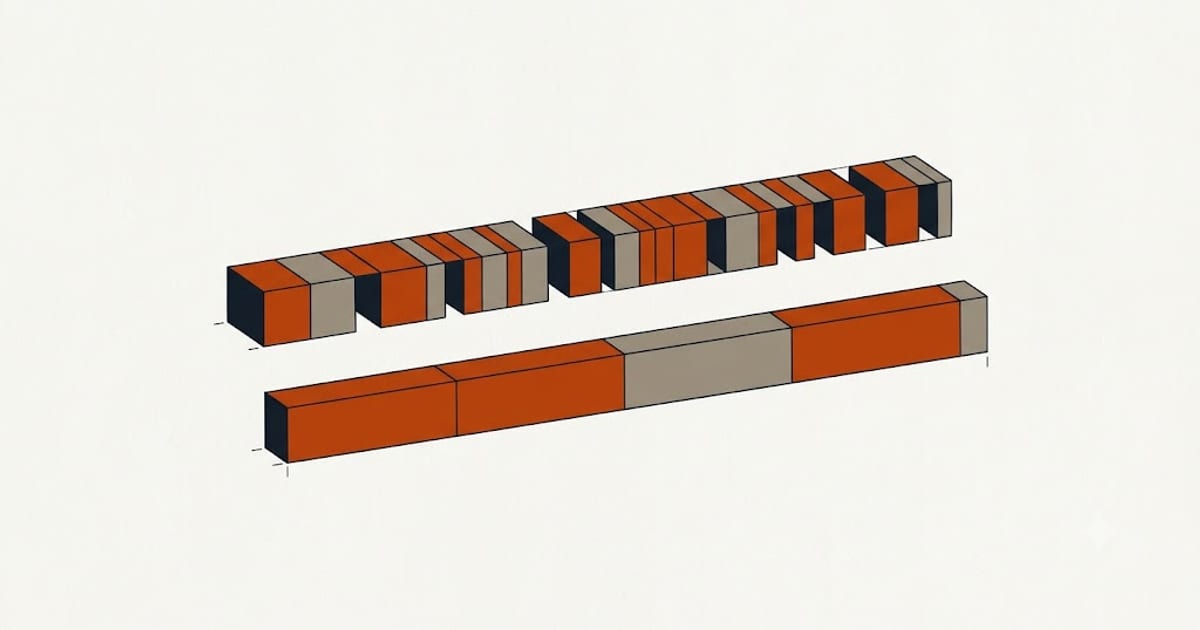
Most American furnaces are larger than their houses require, because each replacement matches the last and because nobody is ever called back to complain about too much heat.
1. Short burns
The furnace runs for a few minutes and stops, repeatedly.
On a cold day a correctly sized furnace should run long cycles — fifteen minutes or more — and at design temperature close to continuously. Cycles of four to six minutes on a genuinely cold day point to oversizing.
Time it. It is the single most informative thing available and it costs nothing.
2. Noticeable temperature swings
The house overshoots and then drifts down before the next call. A swing of three or four degrees is common with an oversized single-stage furnace; a correctly sized or modulating one holds within about a degree.
A thermostat that logs temperature makes this visible over a day.
3. Rooms far from the furnace stay cold
Heat reaches the far rooms only while the blower is running. Short burns mean short blower runs, so the ends of the duct system never receive their share.
This is usually diagnosed as a duct problem, and sometimes it is — but the same symptom is produced by equipment that never runs long enough.
4. It feels drafty even while heating
A single-stage furnace delivers a burst of hot air and stops. The rapid change is perceived as a draft, and the still air between cycles feels cold even at the same average temperature.
5. Wear on the ignition components
Every start cycles the igniter, the inducer and the heat exchanger through a thermal cycle.
A furnace doing five cycles an hour instead of two accumulates the wear far faster, and igniter and control failures well before the expected service life are consistent with years of short cycling.
What it is not
Higher fuel use is a smaller effect than people expect. An oversized furnace wastes fuel warming a cold heat exchanger on each start, but the loss is modest and the main cost of oversizing is comfort and wear rather than the gas bill.
That is worth knowing, because the argument for correct sizing is sometimes made on fuel savings alone and then fails to convince.
Confirming it
Time the burns on the coldest day available.
Log the temperature swing at the thermostat.
Compare the furnace output — input BTU multiplied by AFUE — against a real load calculation. Anything much beyond 140% of the calculated load is outside Manual S guidance.
Two out of three agreeing is a firm answer.
What can be done short of replacement
Check the temperature rise. A furnace at the top of its range has an airflow restriction, and correcting it lengthens the burns.
A thermostat with a longer minimum run time or with adaptive recovery, which prevents the shortest cycles.
Continuous or circulating blower operation, which distributes heat between burns and evens out the far rooms at modest electricity cost, especially with an ECM motor.
Duct balancing, which puts the available heat where it is short.
At replacement
Have the load calculated rather than matching the existing unit. The answer will be smaller — frequently much smaller, particularly if the house has been insulated or air-sealed since the last replacement.
And prefer two-stage or modulating equipment, which tolerates a modest sizing error far better than a single-stage furnace does.
The opposite complaint
A furnace that runs continuously and still cannot hold setpoint on a cold day is undersized, or underfiring, or the house has changed since it was installed.
Continuous operation at design temperature is correct behaviour, not a fault. The distinction is whether the house is actually being held at setpoint while the furnace runs, not how long it runs for.
Why the error keeps propagating
Each replacement matches the last, and the last was matched to the one before it. Houses meanwhile have been insulated, air-sealed and re-glazed, so the load has fallen while the installed capacity has not.
That is why a load calculation on an older house so often produces a number half the size of what is standing in the basement, and why "the old one was 120,000 so we'll put in a 120,000" is the single most expensive sentence in the replacement process.