
Heating load is driven almost entirely by heat escaping through the envelope and by air leaking through it. Both are directly reduced by envelope work, and the reduction is larger than the equivalent effect on the cooling side.
Why heating benefits more than cooling
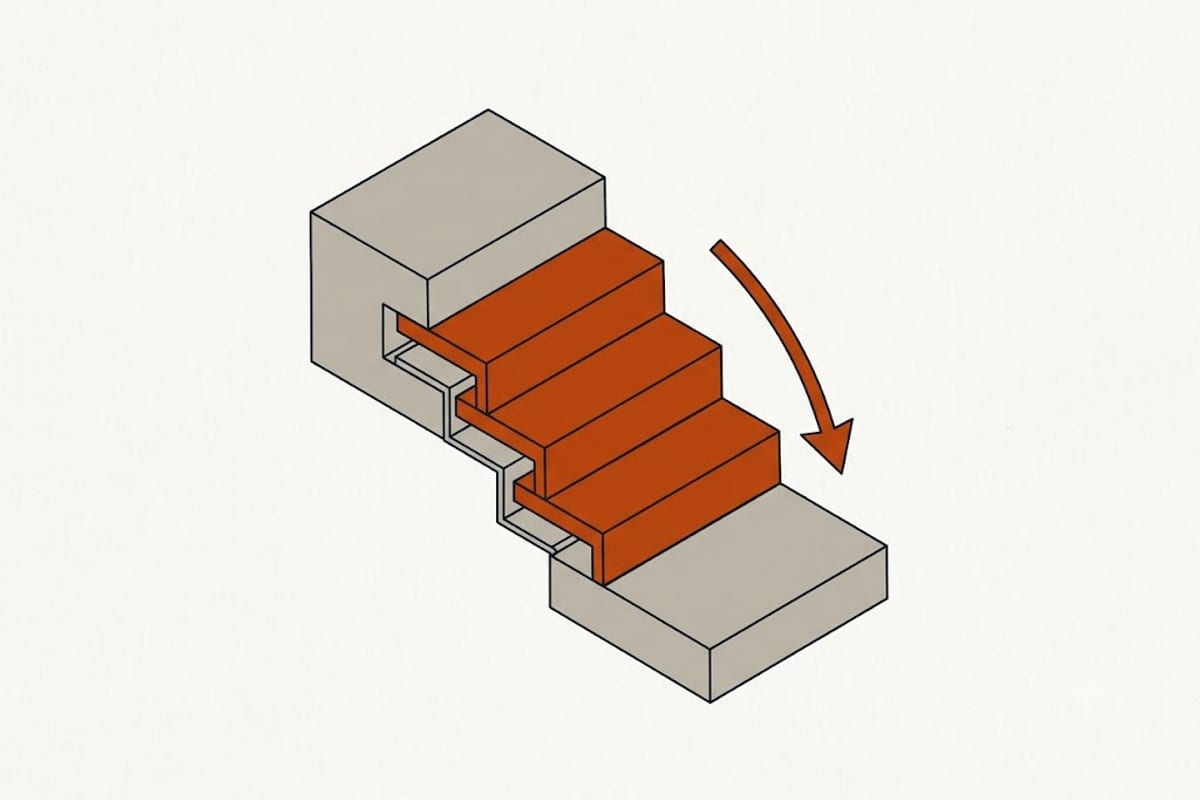
A cooling load contains solar gain and internal gains that insulation does not touch. A heating load is conduction and infiltration, and those are exactly what insulation and air sealing address.
The practical consequence is that a retrofit which takes half a ton off a cooling load can take a much larger proportion off the heating load.
What each measure is worth
Attic insulation to current recommended depths. The ceiling is the largest surface in a single-storey house and the one where stack effect drives the greatest loss.
Air sealing the attic plane — top plates, penetrations, the hatch, recessed lights, chases. In an older house this is frequently the single largest term in the whole calculation.
Rim joist and basement sealing, which is where the replacement air is drawn in.
Duct sealing, if any ducts run outside the thermal envelope.
Window replacement, which matters here for U-factor rather than for solar gain.
Together on an untouched older house these can halve a heating load.
The sequencing that goes wrong
The usual pattern: the furnace fails, it is replaced with the same size, and the insulation is done afterwards because it was the cheaper project.
The result is a well-insulated house with a furnace sized for the house it used to be — short cycling, temperature swings, and money spent twice.
The right order is envelope, then load calculation, then equipment.
When the furnace fails first
Two things help.
Have the load calculated for the improved house, if the improvements are genuinely committed and scheduled. This requires a contractor willing to size for a future state and a homeowner who then does the work.
Choose a two-stage or modulating furnace, which tolerates a load that falls afterwards far better than a single-stage unit does.
Making the smaller size credible
A contractor will reasonably be sceptical of intentions. A blower door test before and after converts the intention into a number the calculation can use, and many utility programmes fund exactly this work and require exactly that test.
Doing the envelope work through such a programme produces the improvement and the evidence in one step.
What it saves
A smaller furnace costs less, and the difference is real though not proportional.
It runs correctly, which is the comfort difference people actually notice.
The ducts already suit it, since a duct system sized for an oversized furnace comfortably carries a smaller one's airflow — one of the few situations where an existing oversized system is an advantage.
The venting may be simpler, since a smaller input can sometimes use a smaller vent and a shorter run.
The dollar comparison worth making
A dollar spent on air sealing and attic insulation reduces the load permanently and reduces the equipment cost at the same time.
A dollar spent on a higher AFUE only reduces the running cost of a load that was never reduced.
For an older house that has not been touched, the envelope is almost always the better first dollar — and it is the one that makes every subsequent decision about the furnace easier.
Combustion safety comes with air sealing
Tightening a house changes the pressure environment that an atmospherically vented furnace or water heater relies on to draft up a chimney.
A combustion safety test — worst-case depressurisation with the exhaust fans running — belongs with any significant air sealing work in a house with atmospheric appliances. Backdrafting is the one way this work can go wrong, and it is checked rather than assumed.
Where the furnace is being replaced with a sealed-combustion condensing model anyway, that concern largely disappears for the furnace and remains for the water heater.
Ventilation after tightening
Below roughly 3 air changes per hour at 50 pascals, a house needs mechanical ventilation — indoor humidity, carbon dioxide and pollutants need a controlled path out.
That ventilation rate is itself a heating load, and it belongs in the calculation. It is a small term beside the infiltration it replaces, and it is a deliberate one rather than an accident of the weather.