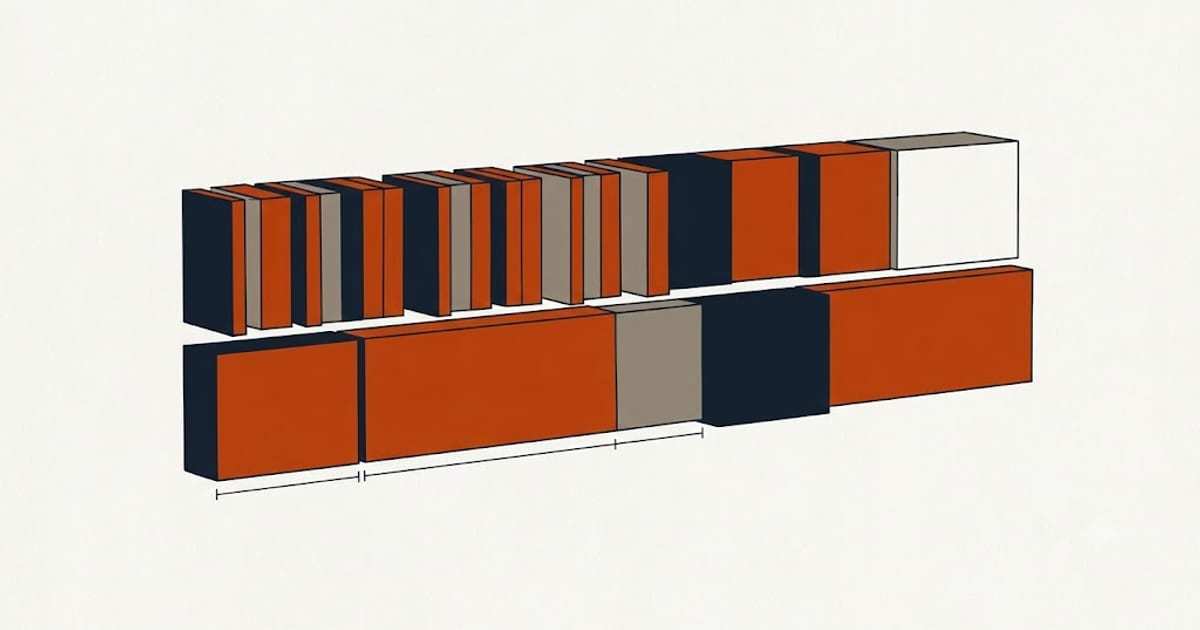
A furnace that fires, runs four or five minutes, shuts off, and starts again ten minutes later is short cycling. On a brand-new high-efficiency unit the cause is very often the upgrade itself.
The arithmetic nobody does at the quote stage
The box is rated in input BTU — the gas it burns. What matters to the house is output — input × AFUE.
An old 100,000 BTU furnace at 80% AFUE delivered 80,000 BTU into the house. Replace it with a 100,000 BTU unit at 96% and the house now receives 96,000 BTU. Same box size on the invoice, twenty percent more heat.
The house did not get bigger. It is now being served by a furnace a fifth too large, so it reaches setpoint early, shuts off, and repeats.
The correct replacement for that 80,000 BTU output is roughly an 83,000 BTU input unit at 96% — which in practice means the 80,000 BTU model, one size down from the old box.
Why "matching the old size" is bad advice twice over
It ignores the efficiency change, as above. And the old unit was probably oversized to begin with — rounding up has been standard practice for decades, so copying it perpetuates somebody else's error into another twenty-year appliance.
What short cycling costs
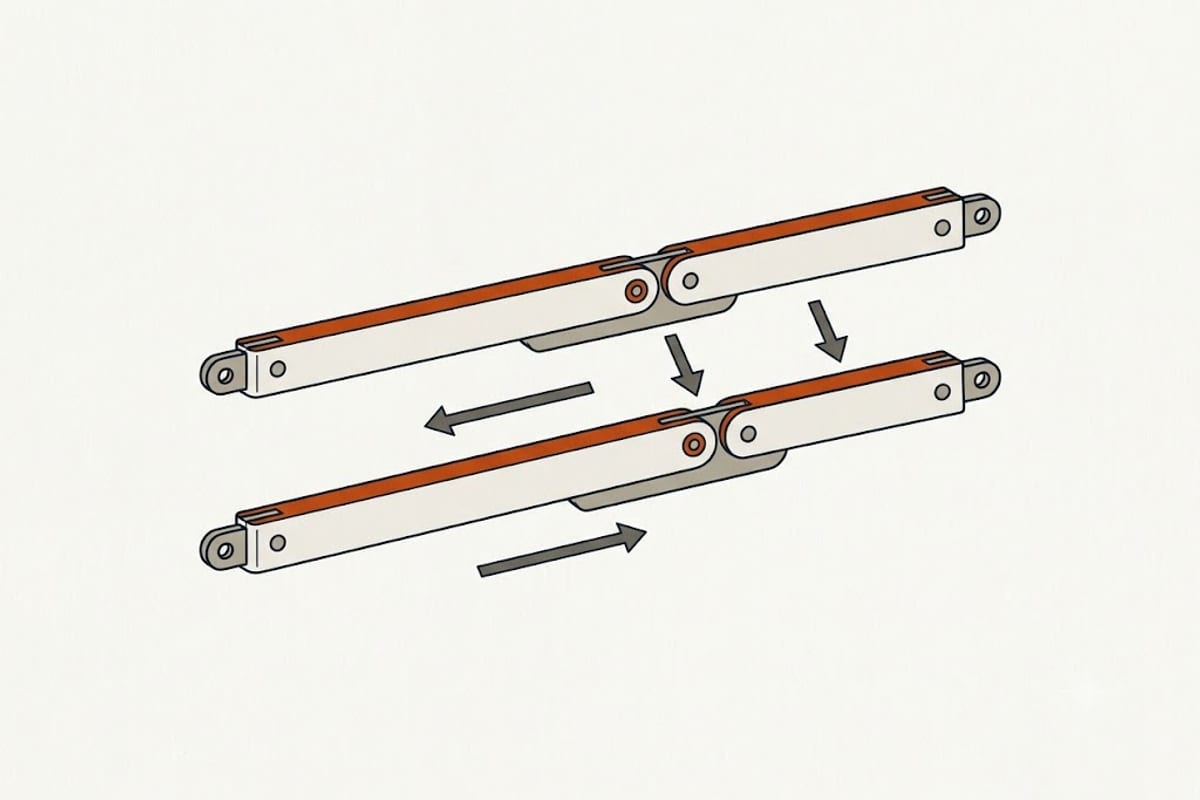
The heat exchanger. It expands when it fires and contracts when it stops. That thermal cycling is what cracks exchangers, and a furnace doing twice the cycles ages at roughly twice the rate.
Comfort at the far end. A five-minute cycle ends before warm air has reached the rooms furthest down the duct run. Those rooms stay cold while the thermostat, near the middle of the house, reports satisfaction.
Efficiency, ironically. A furnace is least efficient during the first minutes of each cycle, before the exchanger is up to temperature. A high-efficiency unit short cycling can deliver worse real-world efficiency than a correctly sized standard one.
The other four causes
A restricted filter or blocked return. The limit switch trips on high temperature and shuts the burner down before the thermostat is satisfied. The distinguishing sign is that the blower keeps running after the burner stops — that is the safety cooling the exchanger.
Closed supply registers. Same mechanism. Closing vents in unused rooms raises system pressure, reduces airflow, and trips the limit. It saves nothing and damages the furnace.
A thermostat in the wrong place. Above a supply register, in direct sun, or on an exterior wall, and it reads a temperature the house does not have. It satisfies early, then drops quickly.
A failing flame sensor. The burner lights and then goes out a few seconds later because the sensor cannot prove flame. This is distinguishable: the cycles are very short — seconds, not minutes — and often come in groups of three before a lockout.
How to tell which one you have
| Observation | Points at |
|---|---|
| Cycles of 3–7 minutes, house comfortable overall | Oversizing |
| Blower keeps running after burner stops | Limit trip — airflow |
| Cycles of 10–30 seconds, repeats then locks out | Flame sensor |
| Some rooms cold, thermostat area fine | Oversizing or duct design |
| Started after closing vents or changing filter grade | Airflow |
If it is oversized and it is already installed
Replacing it is rarely worth it. What helps:
Ask whether it is two-stage. Many modern furnaces are, and the low stage is often 60–70% of full output. If the installer left it configured for single-stage operation — which happens — enabling the low stage largely solves the problem.
Lengthen the fan-off delay. Running the blower longer after the burner stops extracts residual heat from the exchanger and lengthens the effective cycle.
Widen the thermostat differential slightly, so it does not call for a degree at a time.
None of those fix an undersized duct system, and none of them substitute for getting the size right at the next replacement.