A furnace has failed and there is a quote to fix it. Four questions decide whether to spend it.
1. Is the heat exchanger cracked
This one is not economic. A cracked heat exchanger can allow combustion products, including carbon monoxide, into the supply air.
The correct response is that the furnace is taken out of service. Heat exchanger replacement is possible on some models under warranty, and it is expensive labour on an old unit, so in practice a confirmed crack on a furnace past about twelve years is a replacement.
Because the diagnosis has that consequence, ask how it was made. A visual inspection with a camera, or a combustion analysis showing the pattern, is evidence. An assertion is not, and a second opinion on this specific finding is reasonable and worth getting.
2. How old is it
Gas furnaces typically last 15 to 25 years, longer than air conditioning equipment because there is no compressor and no outdoor exposure.
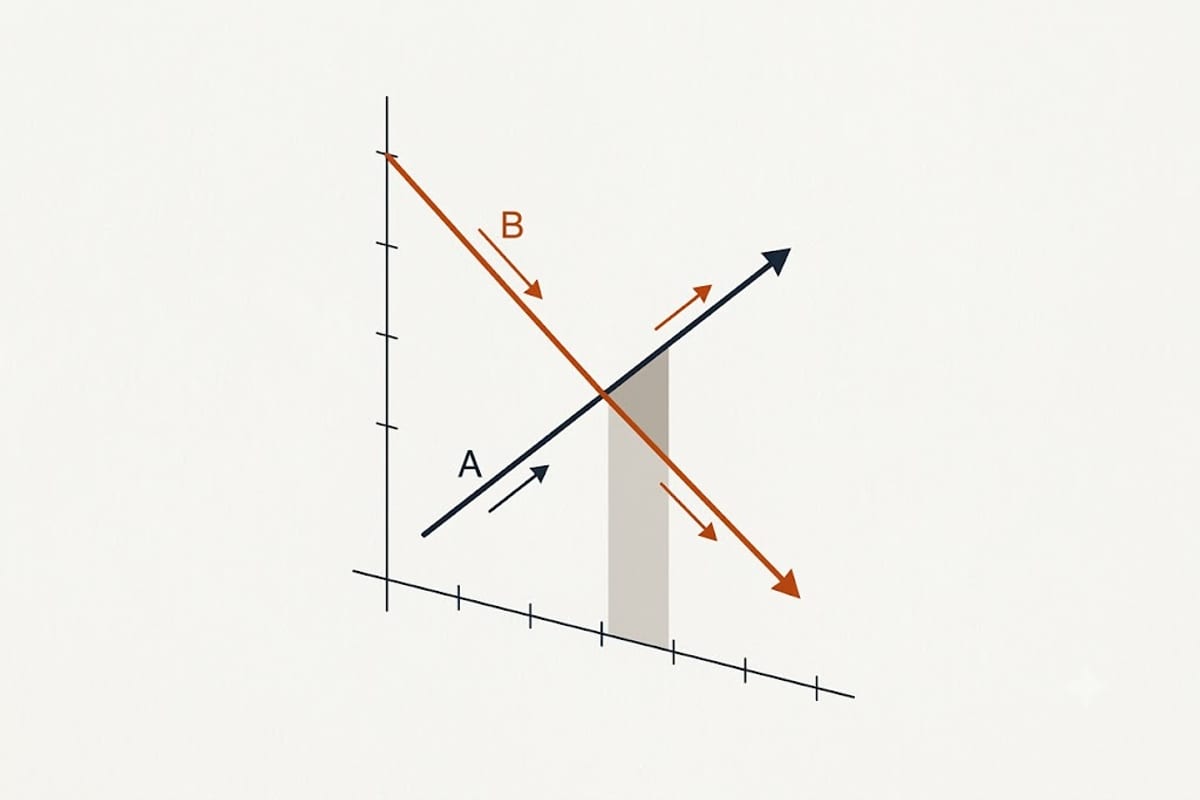
The common heuristic multiplies age by repair cost, with a threshold around the cost of a modest replacement. It captures the right idea: money spent on an old furnace buys fewer remaining years.
3. What has failed
Igniter, flame sensor, capacitor, pressure switch, limit switch — inexpensive, routine, worth doing at almost any age.
Inducer motor, blower motor, gas valve, control board — moderate to significant. Generally worth it below about fifteen years, marginal above.
Heat exchanger — see above.
Repeated failures of different components in one season, which usually means the furnace is at the end of its life regardless of what any single part costs.
4. What else would change at replacement
If the furnace is oversized, if it is single-stage and the house has always had temperature swings, if the blower is an old PSC motor, or if the AFUE is 80% in a cold climate — a replacement fixes several things the repair does not.
If the furnace is correctly sized, staged and reasonably efficient, and the failure is a component, then a repair is straightforwardly the better value.
The argument for replacing on your own schedule
A furnace that fails in a January cold snap is replaced within a day, from whatever is available, at winter pricing, with no time for a load calculation or a second quote.
The same replacement planned for spring or autumn gets the correct size, the preferred equipment and a better price. For a furnace over fifteen that has begun needing repairs, that difference is the strongest argument for acting early.
Carbon monoxide, regardless of the decision
Any house with a combustion appliance should have working CO alarms, on every level and near sleeping areas.
They are inexpensive and they are the layer that does not depend on anybody's diagnosis being right.
What to ask a technician
What was measured, not what was concluded. Combustion analysis figures, manifold gas pressure, temperature rise, static pressure.
A diagnosis backed by readings can be taken to a second contractor and compared. One without them cannot, and for a repair quote at the scale of a heat exchanger or a control board, a second opinion costs a fraction of the decision it informs.
While the decision is open
Get the load calculation done now, in the calm. If the answer is repair, the number is ready for the day the furnace does fail, and that day will not leave time to produce it.
The air conditioner sits on top of it
On a house with central air, the evaporator coil is mounted on the furnace and has to come off to replace it.
That makes the furnace replacement the cheapest moment to replace an old coil, and it is worth asking about if the cooling side is of a similar age. Doing the two separately means paying twice for the same access.
What a maintenance record is worth here
A furnace that has had annual service — burners cleaned, flame sensor cleaned, combustion checked, temperature rise verified — is a better repair candidate at any given age than one that has not been touched.
Where there is no record, assume the latter, and weight the decision toward replacement a little earlier than the age alone would suggest.