Propane heats a great many houses beyond the natural gas network, and it is priced and delivered in a way that natural gas is not.
The energy content
One gallon of propane carries 91,500 BTU. That is substantially less than heating oil at 138,500, which is why a gallon-to-gallon price comparison between the two is misleading.
Delivered heat is the gallon figure multiplied by the furnace AFUE, and the comparison against other fuels is done in dollars per million BTU.
Tank sizes
Residential heating tanks are commonly 250, 500 or 1,000 gallons, with 500 the usual choice for a house heated by propane.
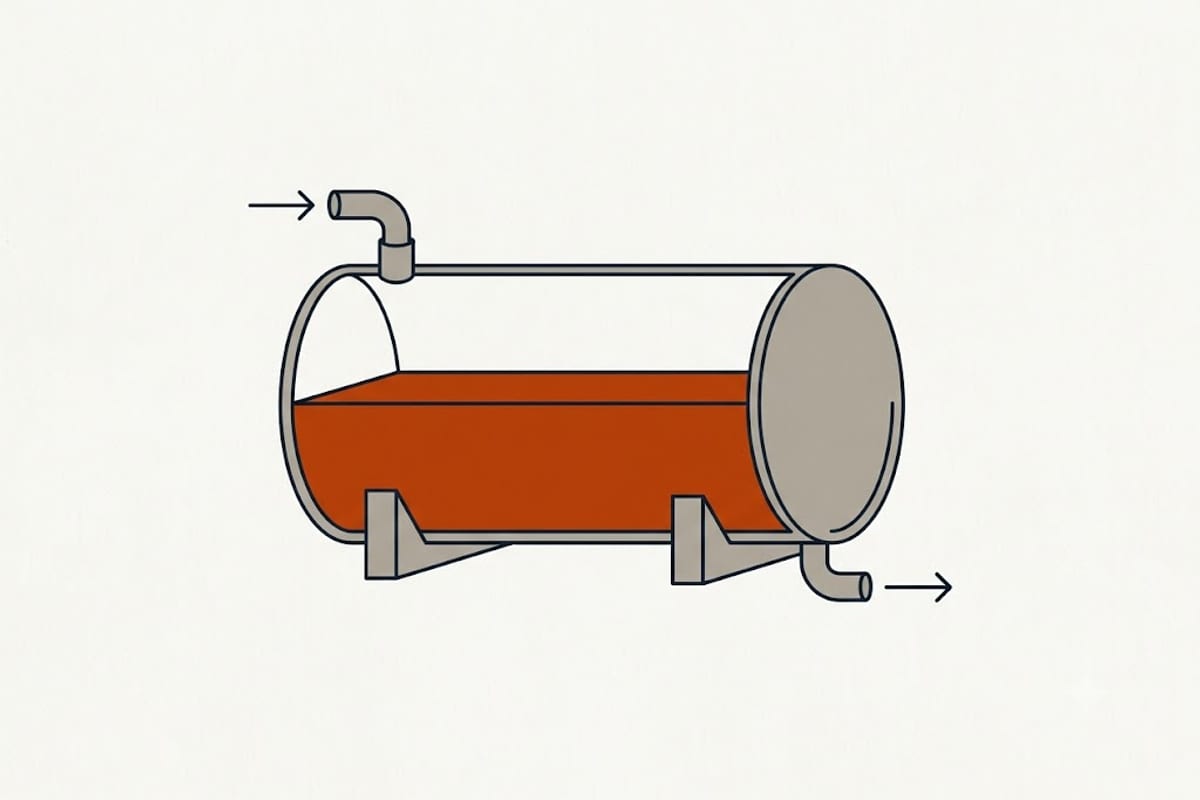
Tanks are filled to about 80% of capacity to allow for thermal expansion, so a 500-gallon tank holds around 400 usable gallons.
Sizing follows annual consumption and delivery logistics. A tank that requires four deliveries a winter costs more in delivery charges and leaves less room to buy on a favourable price.
Who owns the tank
This is the most consequential detail in propane heating.
Supplier-owned tanks are leased, usually for a modest annual fee, and they generally come with a requirement to buy fuel from that supplier. Switching suppliers means having the tank removed and another set.
Customer-owned tanks cost money upfront and allow the household to buy from whoever is cheapest at the time.
A household that owns its tank can shop each delivery. One that leases cannot, and that is why prices per gallon vary so widely between neighbouring houses.
Pricing arrangements
Will-call — the customer monitors the gauge and orders. Cheapest per gallon and requires attention, and running out has real costs.
Automatic delivery — the supplier estimates consumption from degree days and delivers on a schedule. Convenient, and usually at a slightly higher price.
Pre-buy — pay in advance in summer at a fixed price for a set number of gallons. A bet on winter prices.
Budget plans — a levelised monthly payment trued up annually.
Running out is expensive
An empty tank is not simply refilled. Once the system loses pressure, code requires a leak test and relighting of every appliance by a qualified technician before the gas is restored.
That is a service call, and in a cold snap it is a service call with a wait. Keeping the tank above about 20% avoids it entirely, and that is the practical reason automatic delivery is worth the small premium for many households.
Cold weather and vaporisation
Propane must vaporise inside the tank to be delivered as gas, and the rate at which it does so depends on the liquid surface area and the temperature.
A tank low on fuel in very cold weather can fail to vaporise fast enough for a large heating load. This is another reason to keep the level up in winter, and a reason not to undersize the tank in a cold climate.
Where a heat pump changes the arithmetic
Propane is typically the most expensive of the common heating fuels per delivered BTU.
A heat pump in a propane-heated house is frequently much cheaper to run for most of the season, even in a cold climate, with the existing propane furnace retained as backup below the balance point.
That arrangement uses equipment already installed, keeps the cold-weather capacity, and moves most of the season's heating onto the cheaper fuel. For a household currently paying propane prices, it is the single largest available saving.
Underground tanks
A tank can be buried, which removes it from view and protects it from the weather.
It costs considerably more to install, requires cathodic protection against corrosion, and complicates any later change of supplier or removal. Underground tanks also vaporise more steadily in cold weather, since the ground temperature is more stable than the air.
For a household that intends to stay a long time and cares about the view, it is a reasonable choice. For anyone else it locks in a decision that is expensive to undo.
Reading the gauge
The dial on the tank reads percentage of capacity, not gallons.
A 500-gallon tank showing 30% holds about 150 gallons, not 30. Ordering by percentage without doing the conversion is how households on will-call delivery end up cutting it far closer than they intended.